Selling Cards on PJG — and How the Fees Compare
Selling a card should be simple: list it, someone buys it, you get paid. The part that quietly eats your profit is the fees — and every platform counts them differently. This guide walks through how selling on PJG works, what our 8.5% all-in commission really covers, how escrow keeps both sides safe, and an honest look at how those fees stack up against eBay, StockX, TCGplayer and Shopee.
Two ways to sell
When you list a card on PJG you choose the format:
- Fixed price — set your asking price and wait for a buyer. Best for cards with a known market value where you're happy to wait.
- ⚖️ Auction — let buyers bid over a set window. Best for hot, scarce, or hard-to-price cards, where competition often pushes the final price higher than a fixed listing would.
Both run on the same marketplace, the same protections, and the same commission. Pick whichever fits the card.
What "8.5% all-in" actually means
PJG charges a single 8.5% commission on the sale — and that's the whole story. There's no separate listing fee for PJG listings, and no separate payment-processing fee bolted on at checkout. The card-processing cost is already baked into that 8.5%.
That matters because on a lot of platforms the headline rate isn't the real rate. A "final value fee" often sits next to a payment-processing fee, a fixed per-order charge, or a regulatory operating fee — and by the time you add them up, the true cost is noticeably higher than the number in the ad. "All-in" means the number you see is the number you pay.
How escrow protects both sides
When your card sells, the buyer's money doesn't drop straight into your balance — and that's a good thing for everyone.
- The payment is held in escrow while the card is on its way.
- It's released once the buyer confirms delivery, or automatically after 7 days for domestic orders / 14 days for international if they don't act.
- Only then does the amount become withdrawable.
The buyer knows their money isn't gone until the card actually arrives, so they bid and buy with confidence. You, the seller, know a genuine buyer has already paid before you ship. It removes the "who goes first" standoff that makes selling to strangers stressful.
Getting paid out
Once your balance is released, you withdraw it to your payout account:
- Thai bank transfer — free.
- International providers (Wise, PayPal, etc.) — these deduct their own transfer fee from the amount sent; PJG doesn't add anything on top.
Set your payout details once and future withdrawals follow the same route.
An honest fee comparison
Here's how PJG's all-in commission compares with other places collectors sell. These are approximate all-in rates as of writing — competitors adjust their fees over time, so always double-check the current numbers on their sites.
- PJG — 8.5%
- StockX — ~12%
- TCGplayer — ~13.25%
- eBay — ~13.6%
- Shopee — ~11–18% (varies by category and seller programs)
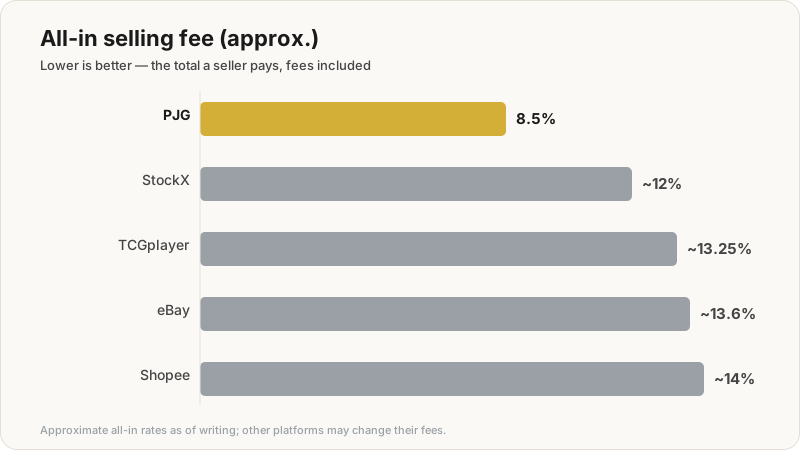
The gap isn't dramatic on a single cheap card — but it compounds fast across a collection.
A worked example: a $100 sale
Say your card sells for $100.
- On PJG: 8.5% commission = $8.50, so you net $91.50. Withdraw to a Thai bank and that's what lands.
- On a platform charging ~13.6% all-in: roughly $13.60 in fees, netting about $86.40.
That's roughly $5 more in your pocket per $100 — before any extra per-order or payment fees the other platform might add. Sell ten $100 cards and the difference is real money.
Start selling
List your first card in a few minutes — fixed price or auction, your call — and let escrow handle the trust part.
Keep more of every sale, and give your buyers a reason to bid with confidence.