Storing Cards in a Hot, Humid Climate
Trading cards are surprisingly fragile — and in a hot, humid climate like Thailand and much of Southeast Asia, the environment itself is one of the biggest threats to a card's condition. Heat and moisture make cardboard swell and warp, and they cloud the foil on holo cards. A card that grades a clean 9 today can quietly lose value in a drawer over a single rainy season. The good news: protecting your collection is cheap and simple once you understand the layers.
Build the protection stack
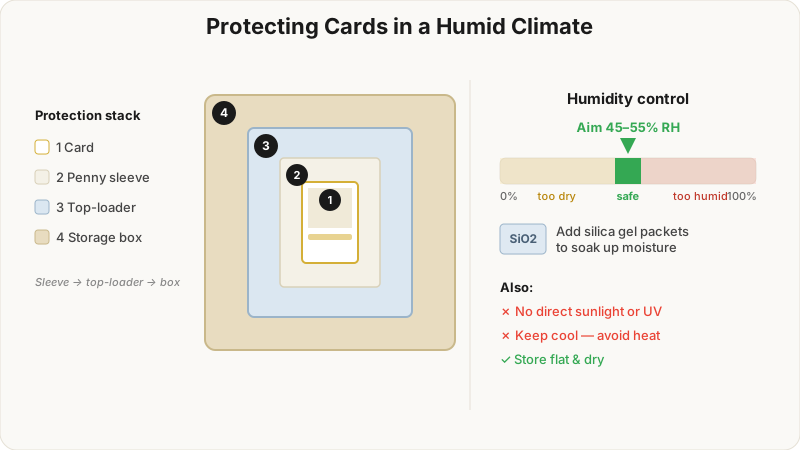
Think of protection as layers, each one guarding against a different threat:
- Penny sleeve — the soft inner sleeve goes on first. It stops surface scratches and dust from touching the card face.
- Top-loader or one-touch — a rigid holder that protects against bending and pressure. A one-touch (magnetic case) is a step up for valuable cards.
- Box or binder — the outer home. A sturdy storage box, or a binder with acid-free pages, keeps cards upright, in the dark, and away from constant handling.
Sleeve → top-loader → box. Each layer is inexpensive, and together they handle scratches, bends, dust, and light all at once.
Control the humidity
This is the step most people in tropical climates skip — and it matters most. Aim to keep your cards at roughly 45–55% relative humidity. Too damp and cards absorb moisture, warp, and develop foil clouding or even mould; too dry (rare here) and they can turn brittle over time.
The easiest fix is silica gel packets — those little "do not eat" sachets. Toss a few into your storage box or a sealed container and they'll soak up excess moisture. For a bigger collection, a sealed box or a dry cabinet with a small hygrometer (humidity meter) lets you actually see the number and swap the silica gel when it's spent. It's cheap insurance for cards worth far more.
Keep away from sun and heat
UV light fades ink and yellows surfaces, and heat is what warps cardboard and clouds foil the fastest. So:
- Never store cards in direct sunlight or on a sunny window sill.
- Keep them out of hot spots — a parked car, right next to electronics, or against an exterior wall that bakes in the afternoon.
- Store the box somewhere cool, dark, and stable — an interior cupboard beats an attic or garage every time.
Cool and shaded beats a spot that swings from hot-and-humid by day to cool by night; those swings are what stress the card.
Ship cards safely
Sending a card? Sleeve it, put it in a top-loader, then tape the top-loader inside a rigid envelope or small padded box — never a flimsy paper envelope. A single graded card should never rattle. Good packing protects the card and your reputation as a seller. If a buyer opens a marketplace order to a bent corner, everyone loses.
The hands-off option: PJG Vault
If storing cards perfectly at home sounds like a chore — especially in a humid climate — PJG Vault is the easy route. You send your card to us once, and we hold it in safe custody. From there you can sell it straight from the vault, or even transfer ownership without shipping — the card never has to travel and risk damage in transit. It's climate-safe storage plus a marketplace, in one place.
The short version
- Layer up: sleeve → top-loader → box/binder
- Keep humidity around 45–55% RH with silica gel
- Avoid sunlight, UV, and heat
- Pack rigid and padded whenever you ship
- Or skip the hassle entirely with PJG Vault
Protecting cards isn't complicated — it's just a habit. And if you'd rather not think about humidity at all, send your cards to PJG and let the vault do the worrying. Want to decide what's worth protecting most? Our free ROI tool helps you weigh a card's value before you commit.